The Signs - Handbook
- These signs warn of dangerous or unusual conditions ahead such as a curve, turn, dip or sideroad. They are usually diamond-shaped and have a yellow background with black letters or symbols.
- Here are some common warning signs:
Maximum vertical clearance of 3.9 metres
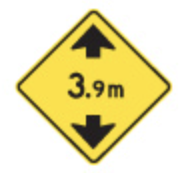
- Indicates that an upcoming structure might not allow room for a tall vehicle; therefore, drivers of such vehicles should choose an alternate route.

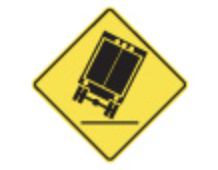
- Trucks are advised to slow down around this curve due to its smaller radius.
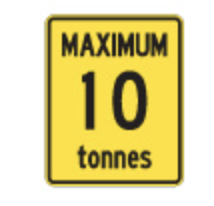
- Trucks over 10 tonnes are advised not to use this roadway.
- Truck entrance on the right side of the road ahead. If the sign shows the truck on the left, the entrance is on the left side of the road.
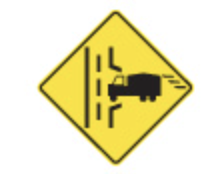
- Indicates an upcoming bus entrance on the right and vehicles should be aware of buses entering the roadway.

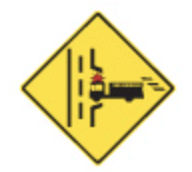
- Indicates an upcoming fire truck entrance on the right and vehicles should be aware of fire trucks entering the roadway.
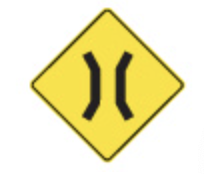
- Narrow bridge ahead.
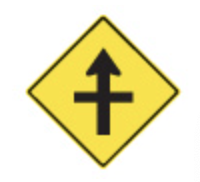
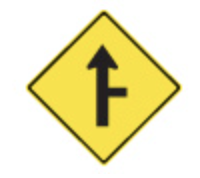
- Road branching off ahead.

- Intersection ahead. The arrow shows which direction of traffic has the right-of-way.
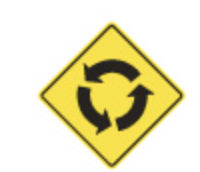
- Roundabout ahead. Reduce speed. The counter-clockwise arrows show the direction of vehicle traffic within the roundabout.
- Drivers on the side road at the intersection ahead don't have a clear view of traffic.
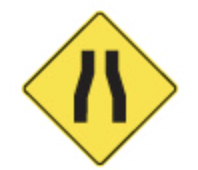
- Pavement narrows ahead.
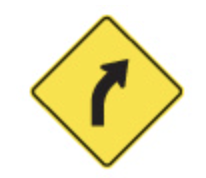
- Slight bend or curve in the road ahead.
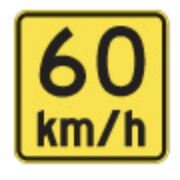
- Posted under a curve warning, this sign shows the maximum safe speed for the curve.
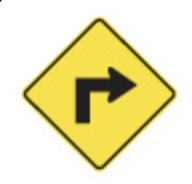
- Sharp bend or turn in the road ahead.
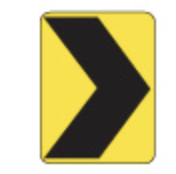
- Chevron (arrowhead) signs are posted in groups to guide drivers around sharp curves in the road.
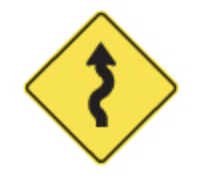
- Winding road ahead.
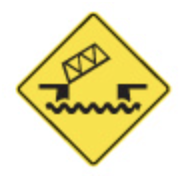
- The bridge ahead lifts or swings to let boats pass.
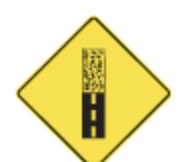
- Paved surface ends ahead.
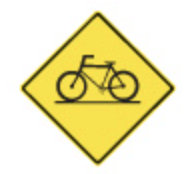
- Bicycle crossing ahead.
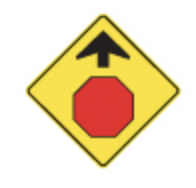
- Stop sign ahead. Slow down.
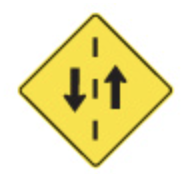
- Share the road with oncoming traffic.
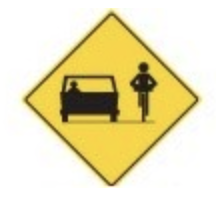
- The share the road sign is used to warn motorists that they are to provide safe space on the road for cyclists and other vehicles.
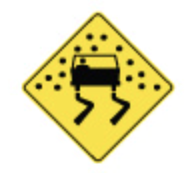
- Pavement is slippery when wet. Slow down and drive with caution.
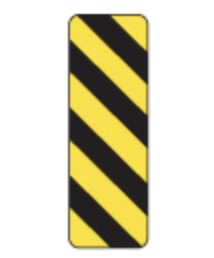
- Hazard close to the edge of the road. The downward lines show the side on which you may safely pass.
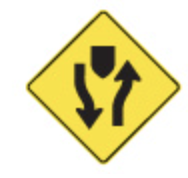
- Divided highway begins: traffic travels in both directions on separated roads ahead. Keep to the right-hand road. Each road carries one way traffic.
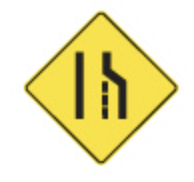
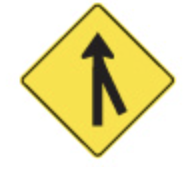
- Right lane ends ahead. If you are in the right-hand lane you must merge safely with traffic in the lane to the left.
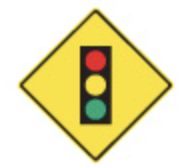
- Traffic lights ahead. Slow down.
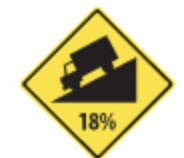
- Steep hill ahead. You may need to use a lower gear.
- Two roads going in the same direction are about to join into one. Drivers on both roads are equally responsible for seeing that traffic merges smoothly and safely.
- Snowmobiles cross this road.

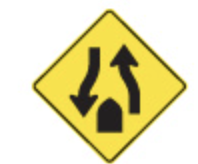
- Divided highway ends: traffic travels in both directions on the same road ahead. Keep to the right-hand road.
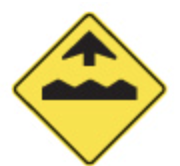
- Bump or uneven pavement on the road ahead. Slow down and keep control of your vehicle.
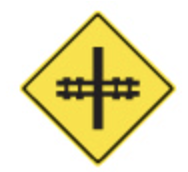
- Railway crossing ahead. Be alert for trains. This sign also shows the angle at which the railway tracks cross the road.
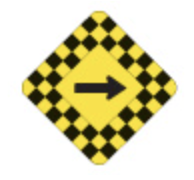
- Sharp turn or bend in the road in the direction of the arrow. The checkerboard border warns of danger. Slow down; be careful.
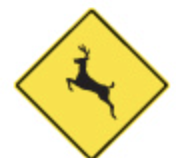
- Deer regularly cross this road; be alert for animals.
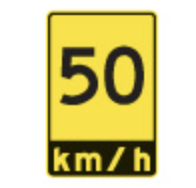
- Shows maximum safe speed on ramp.
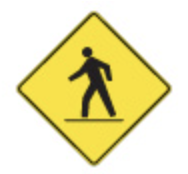
- Watch for pedestrians and be prepared to share the road with them.
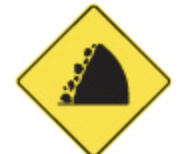
- Watch for fallen rock and be prepared to avoid a collision.
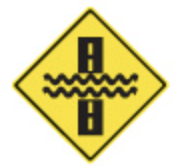
- There may be water flowing over the road.
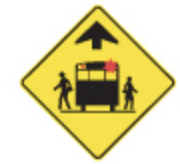
- This sign warns you that you are coming to a hidden school bus stop. Slow down, drive with extra caution, watch for children and for a school bus with flashing red lights.
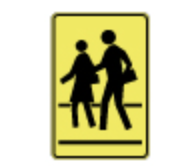
- These signs warn of a school crossing. Watch for children and follow the directions of the crossing guard or school safety patroller.